
For years, ABM (Account-Based Marketing) strategy has helped companies focus on high-value prospective clients and close deals. It still does. But B2B buyers don’t behave like they used to. According to research by 6sense, 81% of B2B buyers pick a preferred vendor before ever speaking to sales. And nearly 70% of their decision process is already done by the time they show up on your radar. So sometimes when you roll out that ABM campaign, it might be too late already.
Today’s buyers are not raising their hands. They read reviews, ask peers, or follow voices they trust. They research on their own terms. If you’re not known before they start looking, there’s a good chance you’re not even considered. The buying journey is also getting even more complex, as the B2B buying committees are becoming larger, multi-location, and frequently access your content from a multi-device environment.
So, is ABM losing its edge in B2B marketing? What do we need to do to reach prospective clients before they make a decision?
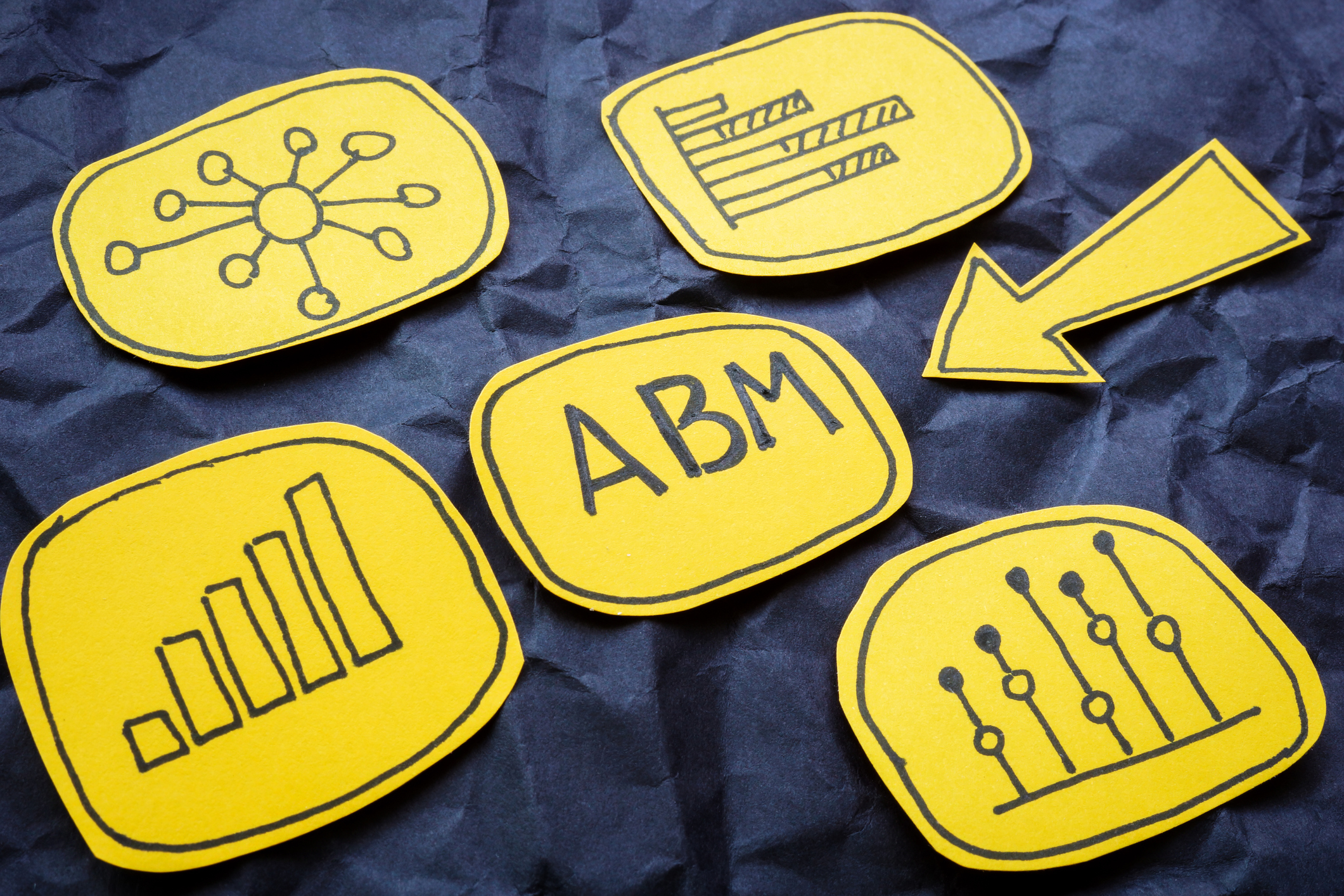
Account-Based Marketing Strategy and The 95/5 Rule
Here’s the real kicker: The 95/5 rule suggests that only 5% of your audience is actively “in-market” to buy. The other 95%? Not ready to purchase. Maybe next year. Maybe in three years. ABM tells you to focus on the 5% who are in-market. That’s smart for short-term results and very effective, as we saw in the campaigns that we conduct for our clients.
But what about the next 5%? Or the one after that? Let’s break down some strategies to address them and where they fall short if used alone:
1. Outbound Marketing
The outbound approach is direct. You pick up the phone and reach out. But these days, it won’t get you too far unless the person has some sort of pre-established relationship with your organization (e.g., already aware of your solution, or interested in your product or service). If you’re only pushing outbound, you’re chasing people who aren’t necessarily ready to buy, and you might get ignored. While you have control over the outreach, you’ll get low engagement unless it’s timed perfectly.
2. Inbound Marketing
Let’s say you create content and wait, hoping someone interested finds it. It’s like setting up traps and hoping someone steps in. It works, but it’s passive and doesn’t necessarily build genuine relationships. Not to mention that the effectiveness is bound to wear out with all the transformations we’re witnessing, such as the zero-click search phenomenon.
With more people finding answers directly on Google or AI tools like ChatGPT, they may never click through to your site. Yes, you’ll still get some visibility, but it’s unpredictable and doesn’t build a connection alone.

3. Account-Based Marketing Strategy
ABM strategy is very efficient. You know your targets and tailor everything to them with a focused approach. But you’re catching them late if they’re already 70% through their process, and you’re ignoring the people who will be ready later. In other words, ABM can potentially yield strong ROI for in-market accounts, but it doesn’t prepare you for future buyers.
You need to implement an ABM marketing strategy, but you shouldn’t stop there. If you’re not building a relationship with the 95% while they’re not buying, you’re missing a chance to be remembered when they reach the decision-making process to buy.
The Solution: Combined ABM-GTM Approach
The best approach would be to invest in getting known by the 95% while you’re targeting the 5%. How? By constantly building your brand, showing up in channels where they look for information, and being useful even when they’re not buying. Because guess what? Next quarter, they might be ready.
This is where a smart Go-To-Market (GTM) strategy comes into play, not to replace ABM, but to enhance it. This stems from a concept introduced by Tom Roach and Dr. Grace Kite. The Go-To-Market plan can help you build reach, trust, and visibility. It’s not about being loud. It’s about being remembered – being top-of-mind when it comes to your solution.
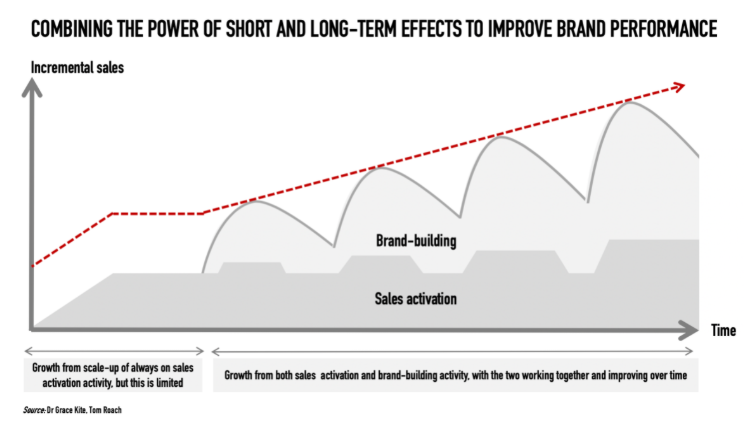
In the above diagram, the flat magenta line chart shows how an Account-Based Marketing strategy performs on its own. It only works on people already looking to buy, and once you’ve reached those few, there’s not much left to tap into.
Now look at the waves. That’s what happens when you add brand-building into the mix. Each wave pushes your results a bit higher. Over time, those efforts stack up. The red dotted line shows how growth picks up when brand and sales work together. And the green line is the path to steady, continuous growth. Combining a GTM plan and an ABM strategy will enable you to not just chase quick wins but to set yourself up to win, year after year.
The Continuous THRIVE Model: Combine GTM and ABM The Right Way
The Continuous THRIVE model is an excellent example of a framework specifically designed to connect the two and achieve continuous growth.
The Continuous THRIVE model has been crafted to meet the unique demands of today’s evolving environment with an adaptable, multi-phase, industry-agnostic approach. It provides a robust structure to combine Account-Based Marketing strategy and Go-to-Market (GTM) planning by aligning technology, data, revenue goals, stakeholder engagement, value articulation, and long-term relationship building. Its implementation follows a five-phase process: Discovery, Actionable Go-to-Market Plan, Marketing/Sales Setup, Execution, and Monitoring and Improvement.
ABM Strategy Is NOT Enough Anymore
Account-based Marketing is a great strategy, but it’s not enough for creating continuous growth alone. Focus on the 5% in-market prospects, but don’t forget the 95% that are yet to be in the market. By combining your account-based marketing strategy with a GTM plan, you will become known before they even need you. That’s how you grow. If you’re looking to leverage the power of a combined ABM-GTM approach in your marketing, reach out to us. We’d love to help you succeed.